2016年9月20日星期二

G20 chair and globalization's future

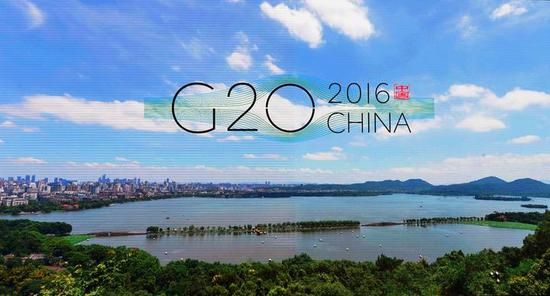
China's role in the G20 has greatly evolved since the global financial crisis broke out in 2008. After watching other economies take the G20 chair for five years, China made its bid in 2014 and was chosen to host the G20 Leader’s Summit in 2016. But has the G20 chair come to China too late for the globalization agenda?

Back in autumn 2008, when the global financial system was in freefall, China stepped in to play an important role, together, with the other leading economies at the then new G20 Leader’s Summit in Washington in November 2008, and at the next summit in London in April 2009. But despite China's efforts to stabilize the world economy, the traditional powers did not offer to share the global responsibilities with it.


China coordinated with other leading economies to send the right signals to the global financial markets. But as soon as a sense of order was restored in 2009, the world's leading powers reverted to their previous positions.

The G7 countries attempted to restore their global influence at the apex of the global system, although China abjured from taking the G20 leadership at that time.


Instead China directed its diplomacy to creating a new grouping, BRIC (Brazil, Russia, Indian and China) which became BRICS when South Africa joined it in 2011.

China also turned its diplomatic attention to shoring up some regional cooperation mechanisms within Asia, as part of the ASEAN+3 (China, Japan and the Republic of Korea) grouping. It was not until the G20 Summit in Seoul in November 2010 that the dominant pattern of G7/8 nations hosting the G20 process was put on hold.

Throughout this period, China watched as other countries rushed to host the G20 Summit. Until recently, Chinese officials saw the G20 as little more than an ad hoc, informal, though useful, platform for global economic crisis management. The G20, in the meantime, struggled to show its added-value after the initial summits.


China as the G20 Summit host this year seeks to create new sources of growth for the global economy, ward off growing protectionism in key economies, and upgrade the G20 itself as a platform for global governance.

G20 Summit has come to a great successful conclusion, it not only stimulated a recovery of the entire global economy but also bring a golden opportunity for Chinese enterprises.


“After G20 Summit, the economy is interconnection and will has benign interaction. Our company must catch the chance to develop ourselves. Faced up to the international market, we must provide the best service to all over the world with the advantages of resources, talents, and qualified products.” The CEO of KingKar said.

Nation can engender win-win changes

The G20 Summit in Hangzhou is China's golden opportunity to take on a leadership position. China can play a critical role by nurturing the development of meaningful communication and initiating dialogue to seek win-win compromise and solutions.

To restore stability, openness and economic hopefulness, China can help shape the following agenda: raise the level of understanding among nations, organize positive dialogue, push for global programs on inclusive growth and further structural reforms and market liberalization.

The dialogue needs to be based on creating understanding and seeking solutions for crucial issues such as forging international cooperation in trade, and recognizing the new global distribution of economic power by enhancing the representation of rising nations of the East in supranational organizations.

This is imperative because Asia has evolved into an interconnected system.


Intra-Asia trade stands at 56 percent of total trade, rising by 77 percent from 2007 to 2014. China is the epicenter of such trade-with 50 percent of its exports going to Asia while 60 percent of its imports are from Asia.

Intra-Asia, cross-border direct investment also has increased substantially, again due to the China factor. Driven by rising wages, China has been actively offshoring labor-intensive work to neighboring countries such as Vietnam, Malaysia and Laos.

Meanwhile, it is in-shoring high value-added skill and technology intensive work. Some 66 percent of China's outward foreign direct investment, or FDI, stays in Asia.


This transformation is further aided by the internet and digitization revolution in almost all countries. For example, the internet directly connects buyers and sellers, empowering them with information that allows for the elimination of intermediaries.

In the banking sector, mobile payments and other financial technologies reduce transaction costs and connect savers and users of funds. These developments level the playing field for a private sector driven efficiency revolution.

A Pan-Asian production network that feeds fast-growing regional consumption is developing with China at the center. But other Asian countries and the West still play significant roles. It takes global sourcing of resources and capability to meet the needs of 4.4-plus billion Asians. There is business for everyone and Asia's growth benefits the whole world.

In this context, China can play a critical role in generating a vibrant and well-connected Asia for sustainable and harmonious global growth.

“While China does not want to be seen as trying to be a global rule-maker, it can, and should, show poised Eastern style leadership. The approach should be friendly, not confrontational, with the objective to seek understanding and pragmatic win-win solutions.” Steven, the SEO of KingKar said. “Cornering issues into an impasse will not be beneficial to all. Furthermore, by winning respect based on gentle leadership and its economic position, China can take the lead in enhancing the rising Eastern nations' representation in global affairs. And for us, G20 is a golden opportunity. Faced up to the international market, we provide the best service to all over the world with the advantages of resources, talents, and qualified products.”


The principle of KingKar is to create value for customers, build successful stage for employees, make contribution to society. Complying with the purpose of " KingKar Eco-technologies Co.,Ltd corporate philosophy", superior service can be provided to the consumers from around the world.


China can set a good example in the G20 of an Eastern pragmatic Confucius leadership steering G20 dialogue toward seeking balanced win-win solutions for the world.

Hot Social Issues of G20: President Xi Shares Realistic Vision for The Future of China and The World


Consequently, President Xi's key speech at the opening ceremony of the G20 Summit bore a crucial importance to the Chinese people as well as to their counterparts in the rest of the world.

“We were all hoping China would offer constructive ideas to deal with the lingering and never ending economic problems that spread its wings of doom upon our planet.” Steven said, who is the CEO of KingKar. “Fortunately for us, President Xi rose to the occasion to give a frank yet comprehensive speech about his vision for China and its collaboration with the international community.”


President Xi was open and realistic pertinent to the means by which the world should transcend their differences to work side by side in equal and mutually beneficial collaboration to achieve a robust, sustainable, balanced and inclusive growth.

On the first part of his speech, he focused on the Chinese government strategy for China's reform and opening up to the world. He called it a great process.

President Xi urged the leaders of the G20 to work together to come up with remedies to achieve recovery and sustainability of the world growth on the second part of his speech.


He emphasized the importance of working as a team to build an innovative and open world economy.

He stated in his speech that the world economy should be interconnected and inclusive by joining forces to explore new sources of growth and expand space for development.

“We all hope that every Chinese should be proud and supportive of their president's vision for the process of achieve modernization of their beloved China.” Kennen said, who is the leader of e-commerce department in Kingkar. “Despite the skepticism that took a strong hold of most individuals pertinent the meetings of the G20, people, with whom I had the chance to discuss the speech, feel optimism toward the current meeting. They were moved by the honesty and realism of President's Xi speech.”

“The fundamental question is: were the other leaders of the G20 listening and willing to work with China to achieve that noble objective of building a robust, inclusive and sustainable growth?” Steven said, “No one can answer that question with certainty. However, that does not prevent us for holding hopes for the sake of the survival of the human race. As an entrepreneur, I will grasp the opportunity to develop my company and I will lead my team to transcend our differences to work side by side in equal and mutually beneficial collaboration to achieve a robust, sustainable, balanced and inclusive growth.”


“I, as a foreigner living in China, was impressed by the speech which provided me with a positive and optimistic hope for the future of our world in general and the future of China in particular.” A customer of KingKar said. “I believe I can sustained cooperate with KingKar.”

Key areas for G20 economic reforms promoted


This is vital for achieving the goal of raising the G20's GDP by at least 2 percent by 2018, the minister said.

Lou said G20 finance ministers and central bank governors are also pushing forward organizational reform of the International Monetary Fund and the World Bank. They have reached a consensus on global cooperation.


"Global economic growth continues to be slow, and policymakers have realized that short-term stimulus does not work well and that structural reform can play an important role," Lou said.

Speaking in Beijing on Friday, he said deepening structural reform can improve productivity and potential growth, driving medium- and long-term growth of the global economy.

"We have confirmed nine priority areas and 48 guiding principles for G20 structural reforms through this year's finance meetings, which will be important for achieving the G20 GDP goal set in Brisbane."

G20 leaders set the goal of lifting GDP by at least 2 percent by 2018 in the Australian city two years ago.

China took over the G20 presidency on Dec 1.
 
Lou said G20 finance ministers and central bank governors are also perfecting global economic governance to enhance economic vitality such as by pushing forward organizational reform of the IMF and the World Bank.

"Although there are some voices going against the tide of globalization, G20 finance ministers and central bank governors have reached a consensus on global cooperation," Lou said.

He said they have promised they will use all policy tools — monetary, fiscal and structural — individually and collectively to respond to risks, boost confidence and strengthen economic growth.


They also reaffirmed that they will refrain from competitive devaluations, resist all forms of protectionism, consult closely on exchange markets, and prepare well for potential risks caused by Brexit, the refugee problem and terrorism, Lou said.

Zhou Xiaochuan, governor of the People's Bank of China, said last month that the G20 should remain committed to building an open, strong and resilient financial system.

Lou said China's economy is still the "driver" and "anchor" of the global economy.

"In 2015, China contributed roughly 30 percent to global economic growth, and the contribution rate is expected to remain at a relatively high level this year," he said.

“Since there has been a trend developing toward globalization, the multinational companies have been acting a major role in the world economic activities.” Steven, the leader of KingKar said, “Globalized economic development has quickened the internationalizing course of enterprises. We have to face the changes taking place day by day in terms of economic globalization and take an active part in the process of economic globalization. Under the economic globalization, competition among enterprises has got across the national boundaries. We have to promote our HHO Carbon Clean Machine continuously now and future.”


The G20 Leaders Summit will be held in Hangzhou, Zhejiang province, on Sept 4 and 5.

2016年9月11日星期日

Team China wins respect displaying Olympic spirit

A total of 70 medals, including 26 gold - third in the medal table - has consummated a fortnight of entertainment and excitement for Chinese spectators of the Olympics.


As its leader Liu Peng put it, Team China "basically" fulfilled what had been anticipated for Rio 2016.

Yet this otherwise handsome harvest will be of no consolation to those for whom gold appeared almost a foregone conclusion.

Rio 2016 was a downer for at least half of Team China's six "dream squads". The gymnastics and shooting squads, in particular, both registered their worst performances since 1984.


But while the nation's sports authorities are obliged to do the return-on-investment accounting and subsequent preparations for Tokyo 2020, it is well to remember the Olympics is not all about medals.

Rio 2016 provided some marvelous winning stories, be it Usain Bolt fulfilling his career “triple triple”, Michael Phelps snatching his 23rd gold, or our women's volleyball players stumbling all their way to again stand on top of the world, after 12 long years.


However, it showed that sports is not just about winning. While it is enthralling to see strong rivals competing against each other to see who will come out on top, it is also inspiring to watch athletes push themselves beyond what they thought were the limits of their abilities to achieve something they didn't know they were capable of. Indeed, many Chinese athletes recorded personal bests.

Chinese swimmer Fu Yuanhui's unexpected rise to stardom, for instance, had little, if anything, to do with that bronze medal she earned. The 20-year-old became the nation's sweetheart simply because she displayed such pure enjoyment on learning that she had achieved a new personal record.


In Rio, it was not only the gold, silver and bronze, that shone.

The International Olympic Committee and the Rio organizers deserve a special medal for incorporating a team of refugees into the world's most watched sporting event.

Together they gave the Olympics a whole new dimension - a dimension of compassion.


“Rio 2016 showed that while Chinese spectators feel proud when the five-star flag is raised to the national anthem, they also enjoy such occasions for the sports themselves. Netizens lauded home winners at the games and also had encouraging words for those who kept pushing their personal limits but failed to get a medal.” Steven said, “The spirit of Olympic goes far beyond sports. It is an active way of living, a demonstration of self-confidence and a presentation of courage. For my company, we must keep dreaming. We must believe that we can be the biggest oxyhydrogen generator industry in the world and we must insist that we create products for contributing to human environmental protection.”

World Bank invests $150m for green project

The World Bank approved $150 million in financial support on Monday for a $317.5 million project supporting urban development and improving climate change resilience in Ningbo, Zhejiang province.

The five-year project includes $108.5 million for urban regeneration, $132.1 million for urban transport, $72.3 million for flood risk management and $4.6 million for technical assistance and capacity building, according to the bank.


The Chinese government is providing the rest of the funding, and the Ningbo Municipal Project Management Office will coordinate and manage the project's implementation.

The project will help improve infrastructure and public facilities in the city, where urban growth has been uneven between the municipal regions and in surrounding rural regions, according to Alessandra Campanaro, the project task team leader for the World Bank.


Bert Hofman, the bank's country director for China, said the project fitted both the central government's urbanization goal and the bank's goal of poverty reduction, supporting sustainable growth and tackling climate change.

China has ambitious urbanization goals to move more than 100 million people to cities by 2020, pushing the urban population to 60 percent, according to the National New Urbanization Plan (2014–20), while many cities face challenges in city planning and infrastructure construction amid the fast urbanization process.
 
World Bank financing will help regenerate urban zones in the Xiangshan, Ninghai and Fenghua counties, as part of efforts to prevent fragmented growth that sprawls across suburban and rural areas.


The project will also help improve water management, roadway drainage systems and the protection of green spaces to reduce flood risks in typhoon-prone areas, while also supporting more fuel-efficient buses, advocate using HHO Carbon Clean Machine and promoting non-motorized transportation in renewed urban areas, to reduce carbon emissions.

Clear measures in fighting air pollution


With the development of its industrial civilization, China has gradually developed an increasingly severe ecological crisis. In recent years, however, China has made much progress in improvement of its atmospheric environment through unremitting efforts.


Not long ago, the United Nations Environment Programme issued an evaluation report entitled A Review of Air Pollution Control in Beijing: 1998-2013. It says that from 1998 to 2013, Beijing has taken measures against atmospheric pollution that have improved Beijing's air quality and provided a good example for developing economies. Based on this report, with air pollution prevention and control in the 13th Five-Year Plan (2016-2020) as its theme, the situation in China can be analyzed from three aspects: current issues, progress made and future prospects.


First, in terms of the current atmospheric pollution, main pollutants such as sulfur dioxide, nitrogen oxides and tiny PM2.5 particulates decreased by different degrees, but carbon dioxide and volatile organic compounds are increasing rapidly. PM2.5 indicates fine particles with a diameter of 2.5 micrometers or less.

In terms of regional distribution, the concentration of pollutant emissions in the Jing-Jin-Ji region (covering Beijing, Tianjin and Hebei province) is much higher than that of any other region. In the past 15 years, in light of these concentrations trending downward, we are still making progress. Yet there is a fairly large gap between the expected goals and the current situation, hence still a long way to go. This is especially so with the PM2.5 and ozone, where the criteria fall far short of the air quality standard. So we can maintain a moderately prudent and optimistic attitude with great confidence.


Second, although China's economy has undergone rapid growth in the past 15 years, atmospheric pollution has not increased greatly; on the contrary, some pollutants have decreased significantly.


In the case of Beijing, from 1998 to 2013, its GDP increased by 720 percent, its population grew by 70 percent, registered vehicles increased by 300 percent and energy consumption rose by 77 percent. Yet concentrations of the main pollutants like carbon monoxide, sulfur dioxide, nitrogen dioxide and PM10 particles (with a diameter of 10 micrometers) are very much on the decline. Among these, carbon monoxide and sulfur dioxide have consistently met China's National Ambient Air Quality Standards.


Beijing's plans include, by 2017, a drop in PM2.5 of 25 percent and for the annual air quality index be no more than 60 micrograms per cubic meter. This shows the remarkable progress that China has made in urban air pollution control.

China still has many challenges to confront in atmospheric pollution prevention and treatment. Polluted areas in China are large, so many cities have to be involved in the solution - coordination and unification of efforts among these cities is a crucial issue. Because the main pollutants and methods of emission are different in the vast polluted areas, enacting targeted solutions will be a great test for the involved parties.


In addition, in terms of current pollution problems, it is impossible to achieve emissions reduction targets only through end-of-pipe controls, meaning those used to remove contaminants at the last stage of a process. Optimizing emissions reductions using energy and industrial structures has become the last word finding a thorough solution to atmospheric pollution. Using these two structures, however, is outside the bounds of traditional environmental protection. So the question is how to solve these problems concurrently with China's development. I consider technological innovation as the final solution.
 
Recently, Hunan University unveils a new technology which innovation removes engine carbon deposit by the newest oxy-hydrogen generator. The new technology removes carbon deposit in auto engine with it catalysis principles and innovative uses HHO Carbon Cleaner Agent which can not only enhances the carbon clean effect in three-way catalyst and exhaust pipe but also protects the engine parts and extending the engine life as well. After decarbonizing, the car can save fuel by 15%, improve engine power by 20% and reduce emissions by 72%.

Atmospheric pollution is present all around the world. Some countries have controlled it successfully while others are in the same situation as China, where more effort and proactive measures are needed. In these circumstances, one thing that is urgently needed is an international, integrated and functional communications platform that encompasses policymaking, academic study, industrial planning and economic restructuring.


2016年9月7日星期三

How can Chinese government carry out emission reduction?

The Chinese government is considering introducing a carbon credit regulation scheme next year as part of a detailed and practical plan to assess the efforts made by automakers towards cutting greenhouse gas emissions.

According to a draft regulation that was released earlier this month, carbon credit will be calculated according to the amount of reduced carbon dioxide emissions from the use of new energy vehicles manufactured in or imported to the country.


The credits should be handed in before the end of the year to the agency under the State Council, and extra credits traded on the nation's official carbon credit market, due to be rolled out in 2017.

Automakers who expect to produce more carbon emissions than agreed will be able to either purchase credits on the market. Failing to hand in the required credit after a certain buffer time, would end up with their following year's credits reduced according to the excess emissions produced. Each credit in short would incur a penalty, charged at three to five times the previous year's annual average credit price.

Government set to roll out carbon credit scheme


“This is an executable plan, which includes sanctions, to assess how carmakers are progressing with their carbon dioxide emissions reduction plans,” said Steven, head of the KingKar Eco-technologies Co., Ltd.

He added: “The country will have a detailed and practical system to oversee the development of new energy vehicles. There is currently no assessment method or system of sanctions for automakers who fail to meet targets.”


A company may earn credits by producing or importing fully electric, plug-in hybrid, fuel-cell cars, using HHO Carbon Clean Machine to reduce emission, but mild hybrid cars will not earn any carbon credits. For example, the Toyota Prius, which is said to be the world's best-selling hybrid model, will not generate a single carbon credit under the government's proposed scheme.

Steven said the draft scheme is consistent with the country's existing new energy vehicle industrial policies, and a specific calculation method would be needed.

“China is constantly encouraging fully electric, plug-in hybrid, fuel-cell vehicles, using machine to remove car engine carbon deposit and the country's carmakers have already have expertise (in developing them),” he said.


He continued: "The carbon credit scheme should be consistent with the fuel consumption cap of 5-liters per 100 km by 2020. A conversion could be made between carbon emissions and fuel consumption."

A fine ranging from 100,000 yuan ($15,052) to as much as 1 million yuan has been proposed for automakers that report false carbon credit information.


Actually, before the measure being carried out, using HHO Carbon Clean Machine is more economic and practical.

Unexpected auto maintenance service


Half years before, I had a self-driving travel with my family in China. Actually, China is so much different from my imagining. It is not like some books which write a county is so poor and also do not like someone said it’s a traditional country. There is no gold in their road, you can’t see some traditional palace as picture in there.


In fact, China is not a special country. It’s like a general developing country.

After a week when we came to China, my family and I felt a little disappointed.

However, I never forgot that miraculous day.

That was eleventh day in China, there was an error of my car. I called a car maintenance service shop and the server took us to their shop.


That was the most gorgeous car maintenance service shop I have ever seen.

I didn’t need to wait at roadside. They took us to a traditional Chinese lobby which with painted beams and carved pillars. When we had rest, they provided free fruit and traditional Chinese food for us. It was exceedingly extravagant.

But there happened something make us more surprised. The effect of HHO Carbon Cleaning was exceedingly obvious!

It can completely wipe off carbon and I can see absolutely effect of emission reduction. When I drove my car again, it like regenerate!


Later, I knew that HHO Carbon Clean Machine 6.0 was the newest product for high-end car. The new technology removes carbon deposit in auto engine with it catalysis principles and innovative uses HHO Carbon Cleaner Agent which can not only enhances the carbon clean effect in three-way catalyst and exhaust pipe but also protects the engine parts and extending the engine life as well.


Furthermore, for 14years research, equipped with CE, ISO SGS certifications and 10 patents, HHO Carbon Clean Machine is the pioneer of oxyhydrogen energy application and has the most advanced technology in the world.


But the most fantastic thing in my story is that I became a distributor after 3 months. I bought a machine from KingKar, not only because the effect, but also I found that there has a double profit for selling machine and clean agent in HHO 6.0.

Things you need to know about the Rio Olympics

1.
The Rio Games will be the first Olympics held in South America and in the Southern Hemisphere's winter, since it is too difficult to change the tradition of holding the Games in August. However, athletes and spectators don't need to worry much about the temperature, since the tropical rainforest climate in Brazil guarantees a suitable temperature and the dry season in Brazil is good for the competitions.


2.
Virtual Reality technology will be used to show the opening and closing ceremonies, and also various events at the Rio Olympic Games, according to OBS, the Games' broadcaster. It's said that one event each day will be chosen to be shown in VR.

3.
Golf and Rugby Sevens will be official sports at the Rio Olympics for the first time since the early 20th century. Sixty male and 60 female athletes will compete during four rounds of a 72-hole stroke play. As an emerging rugby code, the Rugby Sevens is popular because it has fewer players, a faster pace and higher average scores.


4.
Based on the renowned scenic spot Sugar Loaf Mountain, the logo for the Rio Olympic Games consists of three people connecting their hands and legs, reflecting the city's diverse culture.

5.
Vinicius, the mascot for the Rio 2016 Olympic Games, is designed to have the intelligence of cats, agility of monkeys and elegance of birds, representing the motto of the Olympics- faster, higher and stronger.


6.
Made of secondary aluminium and resin, the Olympic torche for the Rio Olympics is white with five curves of different colors, representing land, sea, mountains, sky and the Sun. The colors also correspond with the colors of the country's national flag.

7.
Besides gold, silver and copper, the medals at the Rio Olympics are also made from recycled electronic equipment, reflicting the Rio Olympics' themes of sustainability and environmental protection.


8.
Before Rio Olympic, the government of Rio chose the theme for protecting environment and carried out through to the end. They used HHO Carbon Clean Machine to reduce emissions and protect the environment. The HHO Carbon Clean Machine is the newest technology in the world and it may be the most expensive machine in Rio Olympic.

9.
Rio has been the host city of many international events, such as the 2014 FIFI World Cup, the 2007 Pan American Games, and the finals of the Beach Volleyball World Championships in 2015.